Professional popcorn ceiling removal cost in San Diego tracks total ceiling square footage first, then ceiling height, texture thickness, and how much drywall repair the surface needs once the popcorn is off, covering scrape, skim coat, prime, and paint. Pre-1980 homes may need an asbestos test first, and if asbestos is found, abatement adds real cost on top. The quote you get is priced by the ceiling area a crew has to scrape, contain, and refinish, so measure the rooms you actually want done before you call. We match you with one vetted San Diego County painter who prices it after seeing the ceilings.
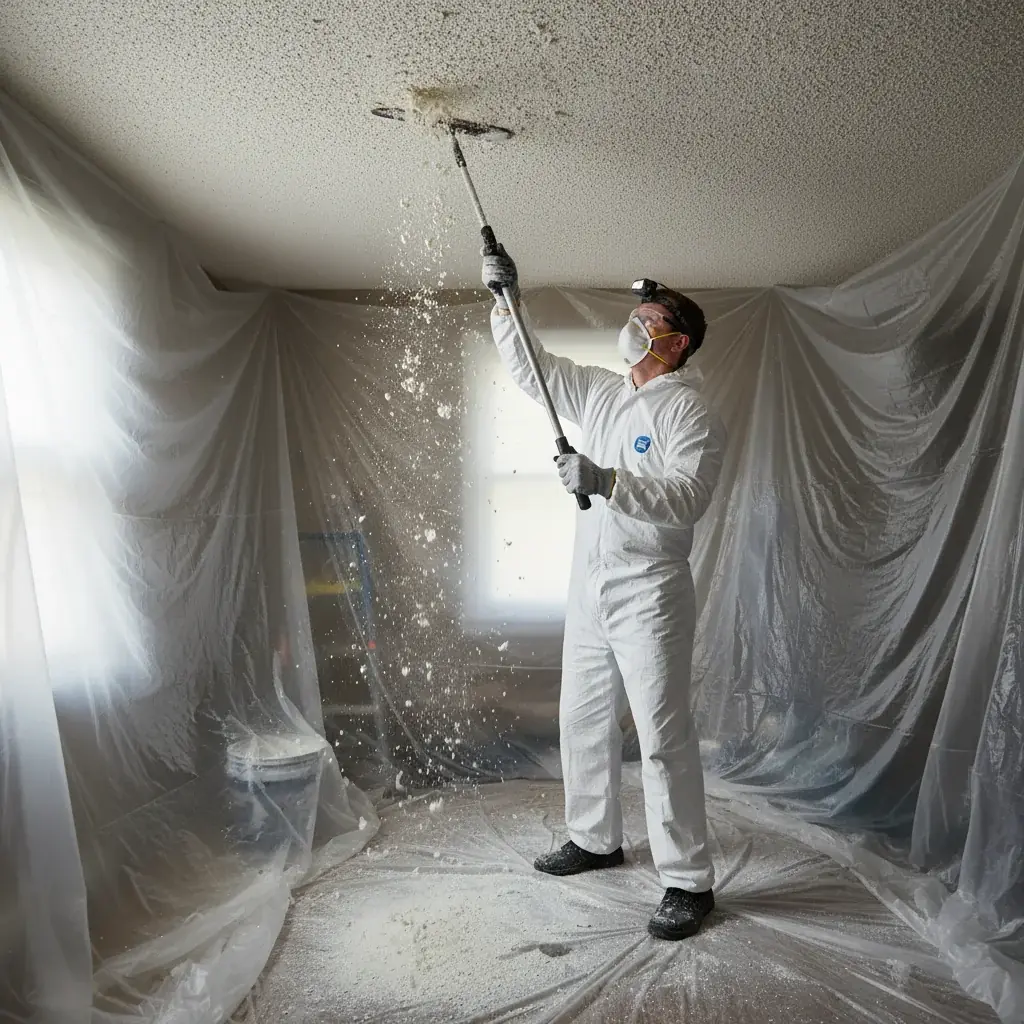
How much does it cost to remove a popcorn ceiling in San Diego?
Popcorn ceiling removal cost in San Diego is quoted by ceiling square footage first, then ceiling height, texture thickness, and how much drywall repair the surface needs once the texture is off. The quote covers scrape, skim, prime, and paint as one price. A pre-1980 home adds an asbestos test before any of it, and a positive test moves the work to a registered abatement contractor at a separate cost.
Cottage cheese ceiling, acoustic ceiling, and popcorn ceiling all name the same sprayed texture, so a popcorn removal cost quote and a cottage cheese ceiling removal cost quote are priced the same way. What changes the number is the ceiling, not the word.
What drives the price per square foot in San Diego
For most San Diego homes, professional popcorn ceiling removal in San Diego costs track total ceiling square footage first. That covers scraping, surface prep, skim coating, priming, and a fresh coat of paint.
A small bedroom sits at the low end of the range. A larger single-story home with standard ceiling heights costs more mainly because there’s more surface to scrape, skim, and repaint, and it climbs further with texture complexity, ceiling height, and what the surface looks like underneath once the popcorn is off.
A few things push costs toward the higher end:
- Ceilings above 9 feet. Scaffolding or extended ladders add labor time.
- Heavy textures. Some installers applied the stuff in multiple passes. Thicker texture means more scraping time and a rougher substrate to repair.
- Water stains or soft drywall. Once the popcorn comes off, damaged drywall shows everything. Repairs add cost, but they’re not optional if you want the ceiling to look right.
- Asbestos. More on that below.
These costs reflect San Diego County labor rates in 2026. They’re higher than national averages, but wages here are higher too. A quote that seems unusually low for the square footage involved is worth questioning.
The asbestos test step you can’t skip on pre-1980 homes
Popcorn texture applied before 1980 frequently contained chrysotile asbestos. It was cheap, fire-resistant, and widely used, until the health risks became undeniable.
If the texture is suspect, have it assessed before anyone scrapes. Confirmed asbestos work follows applicable EPA asbestos rules and local San Diego County Air Pollution Control District rules. There is no universal year cutoff published here.
Testing itself is straightforward. A certified inspector pulls small samples from the texture and sends them to an accredited lab, and your painter schedules it around the lab’s turnaround.
If the test comes back clean, common in post-1978 homes and some older builds that used asbestos-free products, you proceed with standard removal.
If asbestos is present, you’re looking at licensed abatement, not just scraping. That process involves negative-air containment, HEPA vacuums, and disposal according to San Diego County APCD protocol. Abatement adds real cost on top of the standard removal price because of the specialized equipment, certified labor, and hazardous waste disposal it requires. It’s not cheap, but it’s not optional, and a contractor who skips it is creating a serious liability problem for you.
Always verify that any contractor you hire carries a current California C-33 license (specialty painting) and, for asbestos work, holds the appropriate state certification. You can check license status directly on the CSLB website.
If the test comes back positive, who is allowed to do the work?
A registered asbestos contractor, not your painter. California requires contractors and employers removing asbestos-containing material with fiber content above 0.1% to register with Cal/OSHA once the job covers 100 square feet or more of surface area, under Labor Code sections 6501.5 to 6510.
That threshold matters more than it sounds, because a single bedroom ceiling usually clears it on its own. A 10 by 12 room is 120 square feet of ceiling. So on a positive test, this stops being a painting job for almost any real room and becomes an abatement job with its own rules, its own crew, and its own disposal chain.
The work itself is governed by Title 8 of the California Code of Regulations, section 1529 for construction work, with regulated-carcinogen use reported to Cal/OSHA under section 5203.
What this means in practice. A licensed painter can scrape a ceiling that tested negative. A ceiling that tested positive goes to a registered abatement contractor first, and the painter comes back afterwards to skim, prime, texture, and paint. Anyone offering to scrape a positive ceiling as part of a painting quote is telling you something about how they work.
Paint Pros San Diego is a referral service and performs no work. Call (858) 400-6422 and we match you with a vetted local pro who will tell you which of those two jobs you actually have.
Scrape, skim, prime, paint: what’s actually involved
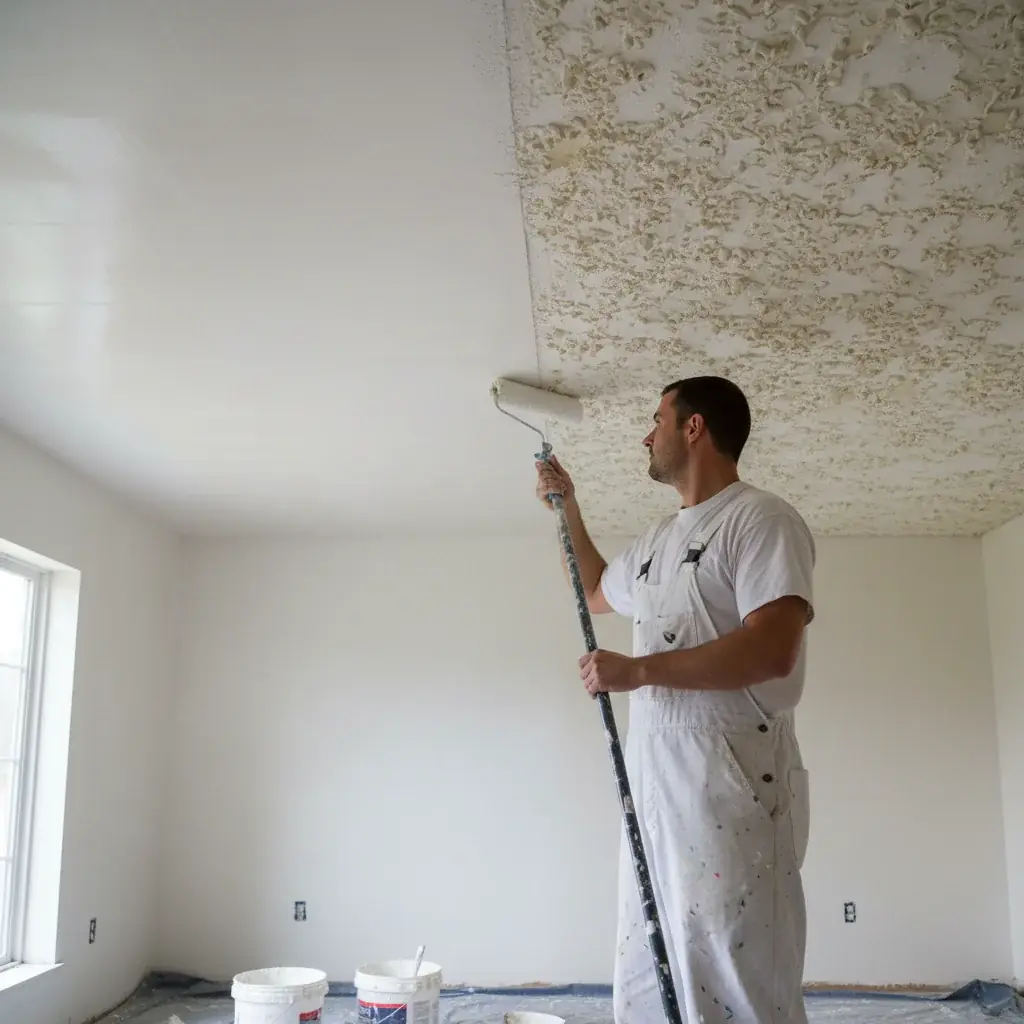
Popcorn removal sounds simple, wet it down, scrape it off, but the steps after the scrape are where the quality difference shows up.
Wetting. The texture is misted with water to soften the binders. Too little water and it tears the drywall paper. Too much and the drywall itself gets saturated. Getting this right takes experience, not just effort.
Scraping. A wide 12-inch drywall knife removes the softened material in long, controlled passes. Every square foot matters here, rushing leaves ridges and torn paper.
Surface repair. This is where most DIY jobs fall apart. Scraping almost always damages the drywall face, gouges, torn paper fibers, old texture adhesion points. Our drywall repair work addresses these before anything else goes on the ceiling. Skipping this step means every imperfection telegraphs through the paint.
Skim coating. A thin layer of setting-type joint compound is troweled over the entire ceiling surface. This creates the flat, consistent plane that makes a smooth ceiling actually look smooth. One coat usually isn’t enough, two passes with light sanding between is standard.
Priming. Bare drywall and skim-coated surfaces are thirsty. A PVA primer seals the surface and gives the topcoat something to bond to uniformly. Without it, the paint flashes unevenly and shows every repair.
Painting. A flat or matte ceiling paint applied by roller completes the job. Most ceilings get two coats.
The whole sequence takes longer on larger rooms and rooms that need more drywall repair; your painter schedules the timeline around ceiling area and repair scope.
Why texture matching matters after removal
Most San Diego homes don’t have uniformly popcorn-covered ceilings. There are often adjacent hallways, closets, or connected rooms with different textures, or walls with orange peel or knockdown that need to transition cleanly into the new smooth ceiling.
If you’re removing popcorn in one bedroom but leaving the hallway ceiling alone, the junction between old and new becomes a visible line unless someone addresses it. The solution is either extending the smooth finish into the transition area or feathering the new texture to match the old.
This is a detail that separates contractors who think about the finished result from those who stop at “the popcorn is off.” It matters especially in open floor plans where the ceiling runs continuously through several zones.
The same issue comes up on walls. If the scraping process damages a wall surface near the ceiling line, and it often does, those repairs need to blend into the existing wall texture. That’s part of why popcorn removal and interior painting work are typically quoted together. Doing them separately usually costs more in the long run and produces worse results at the transitions.
What drives the timeline room by room
What determines how long the project takes for a typical San Diego home:
- Single bedroom. Smaller ceiling area moves faster through skim, prime, and paint.
- Living room or great room. More square footage and often more repair work extends the timeline.
- Full single-story home. Total ceiling area and how much drywall repair the surface needs after scraping are the main drivers.
- Asbestos abatement adds time for containment setup, abatement, and air clearance testing.
These assume the crew can work through the space without moving furniture constantly. Clearing the room before the crew arrives saves real time. Everything needs to move out anyway, the plastic sheeting used for dust containment goes floor-to-wall, and furniture left in the room creates obstacles.
If you’re combining removal with a full interior repaint, scheduling them back-to-back is the efficient approach. The ceiling work happens first; wall painting follows once the ceiling is fully cured. Read more about what a full interior project involves on our interior painting cost breakdown.
What separates a clean job from a messy one
Dust. That’s the honest answer. Wet-scraping contains most of it, but popcorn texture still produces significant debris, and it travels. A professional crew uses floor-to-ceiling plastic sheeting on every wall, protects HVAC returns, and uses a HEPA shop vacuum during scraping, not after.
After scraping, the floor plastic gets rolled up from the inside out and removed before any mud or paint work begins. That containment step keeps texture debris out of carpet, out of light fixtures, and off furniture in adjacent rooms.
Beyond dust control:
- Consistent skim thickness. Uneven skim coats create high and low spots that show under raking light from windows. Good applicators work in even passes and check their work with a work light held at a low angle.
- Proper dry time between coats. Joint compound that gets painted over before it fully dries will crack. In San Diego’s typically low-humidity climate, this is less of a risk than in coastal areas, but it still matters in rooms with poor ventilation.
- Clean paint lines at the wall-ceiling junction. Once the ceiling is painted, the wall color gets cut back in neatly. Sloppy ceiling work that gets fixed with tape is a shortcut that shows up in close-up lighting.
A finished smooth ceiling should look like it was always there. If you’re standing in the room and thinking about the ceiling at all, something didn’t go right.
Frequently asked questions
How much does popcorn ceiling removal cost in San Diego?
Cost for professional removal tracks total ceiling square footage first, then ceiling height, texture thickness, and repair scope. High ceilings, thick texture, and drywall repairs push the quote toward the upper end.
Do I need an asbestos test before removing popcorn ceiling?
Yes, if your home was built or significantly remodeled before 1980. Popcorn texture from that era frequently contained chrysotile asbestos, and disturbing it without approved abatement is a violation of EPA and San Diego County Air Pollution Control District rules. Your painter schedules testing with an accredited lab. If asbestos is found, licensed abatement adds real cost per square foot on top of standard removal.
What does asbestos popcorn ceiling removal cost compared to a standard scrape?
More, and the gap is not small. Standard removal is scrape, skim, prime, paint. Asbestos popcorn ceiling removal adds negative-air containment, HEPA vacuums, certified labor, air clearance testing, and hazardous-waste disposal, and it has to be run by a Cal/OSHA-registered abatement contractor rather than a painter. The painter comes back afterwards to skim, prime and paint. Neither cost is quoted until the lab result is in, because the lab result decides which of the two jobs you have.
Is popcorn ceiling removal worth it?
For most San Diego homeowners, yes. Smooth ceilings modernize the space, photograph better for listings, and eliminate a surface that collects dust and discolors with age. The cost is a one-time expense, and the result holds up for the life of the home.
How long does popcorn ceiling removal take?
Timeline from scrape through final paint tracks room size first, then how much drywall repair the surface needs after scraping. A single bedroom moves fastest; a full single-story home takes longer given the total ceiling area. Asbestos abatement adds time for containment, abatement, and air clearance.
Can I remove popcorn ceiling myself?
You can, on a post-1978 home with a clean asbestos test. The scraping itself isn’t difficult, but the skim coat and surface repair that follow require real drywall skill. Uneven skim coats show badly under any raking light from windows. Most DIY jobs end up with a ceiling that looks worse than the original texture because the repair work gets skipped or done poorly.
What goes on top after the popcorn is scraped off?
After scraping, the ceiling gets skim-coated with setting-type joint compound in two passes, sanded between coats, then primed with PVA primer and painted with two coats of flat ceiling paint. The skim coat is what creates the smooth, consistent surface, and it’s the step that separates a professional result from a rough scrape.
Is there popcorn ceiling removal near me in San Diego?
Yes. Paint Pros San Diego matches you with a popcorn ceiling removal crew that already works your city, from Oceanside and Escondido down to Chula Vista and Imperial Beach. The asbestos test still comes first on pre-1980 texture. We are a referral service and do not scrape ceilings ourselves. Call (858) 400-6422.
When to call us
Popcorn ceiling removal in a pre-1980 San Diego home, or any home where you’re not certain about the texture’s composition, needs a licensed contractor who can handle the asbestos testing coordination and, if needed, abatement. Even on newer homes, the skim coat and repair work that follow scraping require the same skills as any drywall and interior painting project. This isn’t a weekend DIY job if you want a result that holds up.
Paint Pros San Diego is the service San Diego homeowners call to get matched with a popcorn ceiling removal crew. It is a referral service and performs no work itself. Call (858) 400-6422 and we’ll connect you with a vetted local painter.