Professional cabinet refinishing in San Diego follows a 6-step process: on-site masking, door removal and transport to a spray shop, shop degreasing and priming, HVLP spray finishing, painting the fixed cabinet boxes at home, and reinstallation with final adjustments. The full process typically takes several days for curing after the finish coats. It delivers a factory-smooth result at a fraction of cabinet replacement cost. For the full picture on what this looks like in San Diego kitchens, see our kitchen cabinet painting guide for San Diego or browse cabinet painters near you.
Step 1: On-site prep and kitchen masking
Before any paint can touch your existing cabinets, thorough preparation is essential. This is where the meticulous nature of a professional job truly begins, and it’s far more involved than simply tossing down a drop cloth. A professional cabinet painter arrives prepared to completely protect your home, ensuring that dust, paint overspray, and debris stay contained to the work area.
The process starts with carefully removing all contents from your cabinets and drawers. Then the painter meticulously masks off the entire kitchen: not just a quick covering, but a full barrier. High-quality plastic sheeting goes over countertops, backsplashes, and appliances. Floors are protected with heavy-duty paper and tape. Adjacent walls and ceilings are masked to prevent paint mist from migrating. This extreme level of protection is important when professional spray equipment is used. Without precise masking, overspray settles on other surfaces, a messy and unprofessional result. This step alone shows why professional cabinet painting in San Diego goes far beyond a weekend DIY project.
Step 2: Removing and transporting doors and drawers
Once your kitchen is fully protected, the focus shifts to the cabinet components themselves. All cabinet doors, drawer fronts, and any decorative trim or hardware are carefully removed. Each piece is labeled with a numbering system that corresponds to its original location. That labeling system is vital. It guarantees that every door and drawer returns to its exact spot, ensuring perfect alignment and functionality after refinishing.
The painter then carefully transports all components to a dedicated spray shop. Working off-site is a cornerstone of professional cabinet refinishing. It allows the most critical sanding, priming, and finishing steps to happen in a controlled environment, free from household dust, pet hair, and fluctuating humidity that could compromise the final finish. This controlled setting is impossible to replicate in an active kitchen, and it’s a key differentiator between a DIY attempt and a true factory-like application.
Step 3: The shop process: degreasing, sanding, and priming
This is where the real transformation begins for your cabinet doors and drawer fronts. At the shop, these components undergo a rigorous multi-step preparation. First, every surface is thoroughly degreased. Kitchen cabinets accumulate layers of grease, grime, and cooking residue over time, especially around the stove and sink. Simply wiping them down isn’t enough. Specialized, powerful degreasers are used to chemically clean every inch. Paint will not properly adhere to a greasy surface. Skipping this step almost guarantees peeling and chipping.
Once degreased and cleaned, the surfaces are meticulously sanded, not to remove all the existing finish, but to scuff it and create a microscopic profile that primer and paint can grip. Fine-grit sandpaper and precision sanding tools smooth out all old imperfections. After sanding, all dust is completely removed with tack cloths and industrial vacuums. Then a high-quality primer designed specifically for cabinetry is applied, one formulated to block stains, promote superior adhesion, and provide a smooth, uniform base for the topcoats. Without thorough degreasing, proper sanding, and a high-performance primer, even the best paint won’t live up to its potential.
Step 4: Spraying for a factory-like finish
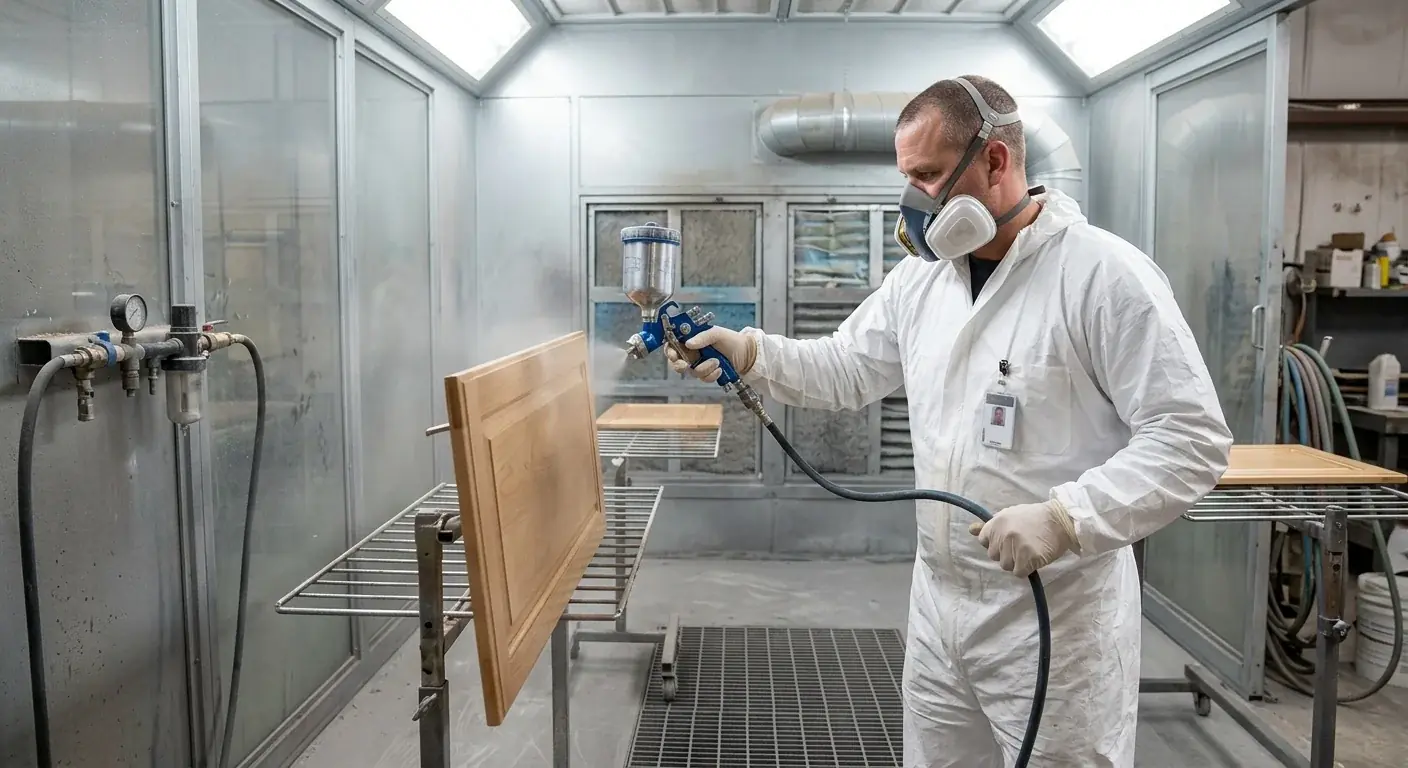
With the cabinet doors and drawer fronts perfectly prepped, it’s time for the finish application. Professional cabinet painters use HVLP (High Volume Low Pressure) sprayers in a controlled shop environment. Spray application is paramount for that smooth, durable, factory-like finish you can’t achieve with brushes and rollers alone. Brushing inevitably leaves brush marks. Rollers can still create texture that isn’t truly smooth. HVLP sprayers atomize the paint into a fine mist, delivering an even, consistent coating without any brush strokes or roller stipple.
Multiple thin coats are applied, with adequate drying time between each. This layered approach builds depth and durability. Premium products like Sherwin-Williams Emerald Urethane Trim Enamel are the standard choice, engineered for superior hardness, excellent scrub resistance, and a smooth, elegant appearance that holds up to daily kitchen wear and tear. Each coat is inspected, and any minor imperfections are addressed before the next layer. This meticulous process is what separates professional cabinet refinishing from a standard paint job.
Step 5: Painting the cabinet boxes in your home
While the doors and drawers are being finished at the shop, the painter returns to your San Diego home to address the fixed cabinet boxes. The same high standards of preparation and application apply. The kitchen stays perfectly masked and protected throughout this stage.
The cabinet boxes undergo a thorough cleaning and degreasing to ensure proper adhesion. Surfaces are carefully sanded to create an optimal primer profile. All interior areas and edges that won’t be painted are taped off to maintain clean, sharp lines. After sanding, dust is removed and a high-performance primer is applied. For the topcoats, the same premium Sherwin-Williams Emerald Urethane Trim Enamel is used, often applied with an HVLP sprayer. In areas where spraying isn’t feasible due to tight spaces, fine-finish brushes and rollers minimize any texture to blend with the sprayed doors and drawers. If you’re still considering your options, popular kitchen cabinet paint colors in San Diego for 2026 can provide inspiration.
Step 6: Reinstallation and final adjustments
Once all painted surfaces are fully cured, a process that takes several days to ensure maximum hardness and durability, the painter carefully transports the newly refinished cabinet doors and drawer fronts back to your San Diego home. This is the moment your vision truly comes to life. Each component is meticulously reinstalled, guided by the precise labeling system from the removal step. Every piece returns to its exact original position, guaranteeing perfect alignment and functionality.
All hinges, hardware, and decorative elements are reattached with care, with any necessary adjustments for smooth operation. It’s not uncommon for minor adjustments to be needed after painting, as the thickness of the new finish can subtly alter fit. A skilled painter handles these fine-tuning steps, ensuring every door closes perfectly and every drawer slides effortlessly. A thorough final inspection checks for any missed spots, imperfections, or operational issues, followed by a walkthrough with you. The result is a kitchen that feels brand new, with a resilient, factory-smooth finish. It’s a significant upgrade that offers incredible value compared to completely replacing your cabinets.
Frequently asked questions
How long does professional cabinet refinishing take in San Diego?
The hands-on work spans a few days, but plan for several days of curing after the finish coats are applied before your cabinets are back to full use. The shop process (degreasing, priming, and spraying doors and drawer fronts) runs concurrently with painting the fixed cabinet boxes at home, so the total timeline is shorter than it sounds.
Is cabinet refinishing worth it compared to replacing cabinets?
Yes, in most cases. Refinishing costs a fraction of full cabinet replacement and delivers a factory-smooth finish with the same premium topcoats, like Sherwin-Williams Emerald Urethane Trim Enamel. If your cabinet boxes are structurally sound, refinishing is the smarter investment for San Diego homeowners.
What paint is used for professional cabinet refinishing?
Professional refinishers in San Diego typically use a urethane trim enamel, such as Sherwin-Williams Emerald Urethane Trim Enamel. This product cures to exceptional hardness and handles daily kitchen wear, scrubbing, and humidity better than standard wall paint.
Why do pros take cabinet doors to a spray shop instead of painting on-site?
A controlled shop environment eliminates household dust, pet hair, and humidity variations that cause imperfections in a cured finish. HVLP spray equipment in a dedicated shop also produces a smoother, more even coat than anything achievable in an active San Diego kitchen.
How do I know the doors will go back in the right place?
Every door and drawer front is labeled with a numbered system before removal. That label ties each piece to its exact original location, so reinstallation restores perfect alignment and smooth operation without guesswork.
Does professional cabinet refinishing require me to leave my home?
No. The shop work happens off-site, but the team returns to paint the fixed cabinet boxes in your kitchen. You can remain at home during most of the process, though you’ll want to keep the kitchen clear while masking and painting are active.
When to call us
Considering a refresh for your kitchen? Achieving a professional, durable cabinet finish requires specialized equipment and meticulous prep that’s hard to replicate without the right tools and experience. When you want cabinets that look factory-new, call (858) 400-6422 and we’ll match you with a vetted San Diego cabinet painter. Always verify your contractor’s credentials with the CSLB at cslb.ca.gov.