TL;DR
- Committee approval takes time, so start the submission before you book the crew.
- Most San Diego master-planned communities use an approved palette of 15–30 colors; pick from the list.
- Common rejection reasons: using a non-approved color, mismatched trim color, or missing a required signature.
- A complete submittal includes color samples, photos of the home’s current state, and neighboring homes’ colors.
- Your painter should handle the submittal paperwork, it’s part of the job on HOA homes.
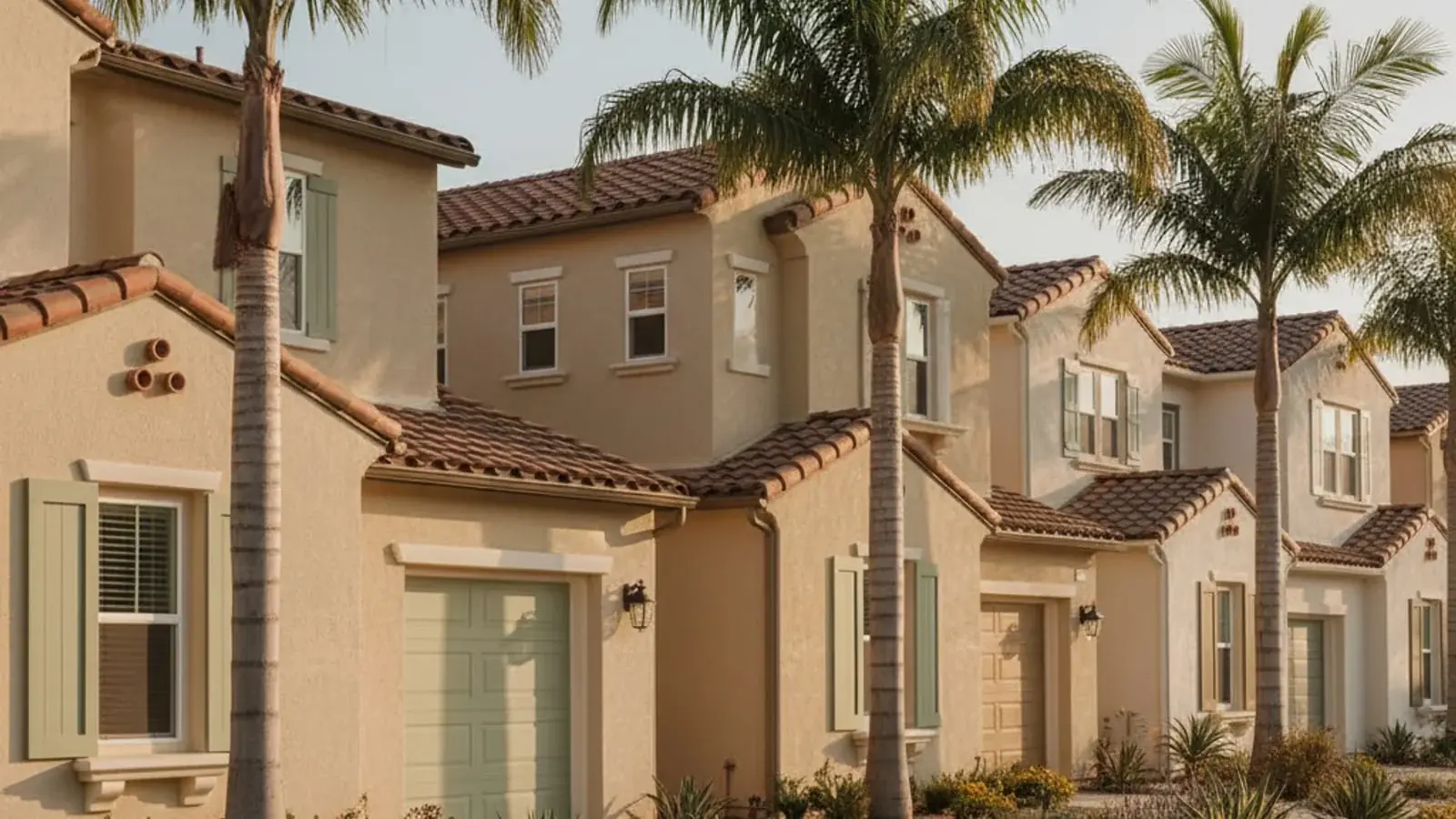
If you live in a San Diego master-planned community, Rancho Bernardo, Otay Ranch, Santaluz, Del Sur, Carmel Valley, Sabre Springs, Lake San Marcos, or any of the hundred+ smaller HOAs, you can’t just pick a paint color and start. Exterior painting needs HOA architectural approval before the first pressure-washer fires up. For broader project context, see our residential painting guide for San Diego and our exterior painting guide for San Diego.
This post walks through how the process actually works, what the submittal looks like, the most common reasons boards reject applications, and how to get approved on the first try.
Why do HOAs control exterior paint?
HOAs exist to preserve the aesthetic integrity and property values of a planned community. Paint is the single most visible element of that aesthetic, a single off-palette house can affect the look of the whole block.
Most master-planned communities started with an architectural guide developed by the original developer. That guide specifies:
- Approved exterior field (body) colors
- Approved trim colors and combinations
- Approved accent colors (front doors, shutters, window frames)
- Rules about color repetition (no two adjacent houses can be the same color, typically)
- Rules about what can’t be painted (natural stone, brick, architectural metal)
When the development turned over to the HOA, those architectural guidelines came with it. The HOA board (and usually an Architectural Review Committee or ARC) enforces them going forward.
What’s the process?
The general sequence looks like this:
1. Get the approved color palette
Before you pick a color or get a quote, get the HOA’s current approved palette document. This is usually a PDF on the HOA portal, or available by request from the property management company. San Diego HOAs almost universally use Sherwin-Williams or Benjamin Moore for their approved palettes, with specific SW or BM color codes listed.
If you don’t have a login to the HOA portal, email the property manager. Most will send the palette within a business day or two.
2. Pick your colors
Once you have the approved palette, pick:
- Field color (the main body color of the house)
- Trim color (window trim, fascia, eaves)
- Accent color (front door, shutters if applicable, garage door if applicable)
Most palettes list approved combinations. If yours does, stick to a combination, the ARC will reject mix-and-match from the approved list if the combination isn’t explicitly allowed. If no combinations are specified, stick to complementary combos (warm field + warm trim, cool field + cool trim, don’t mix warm and cool).
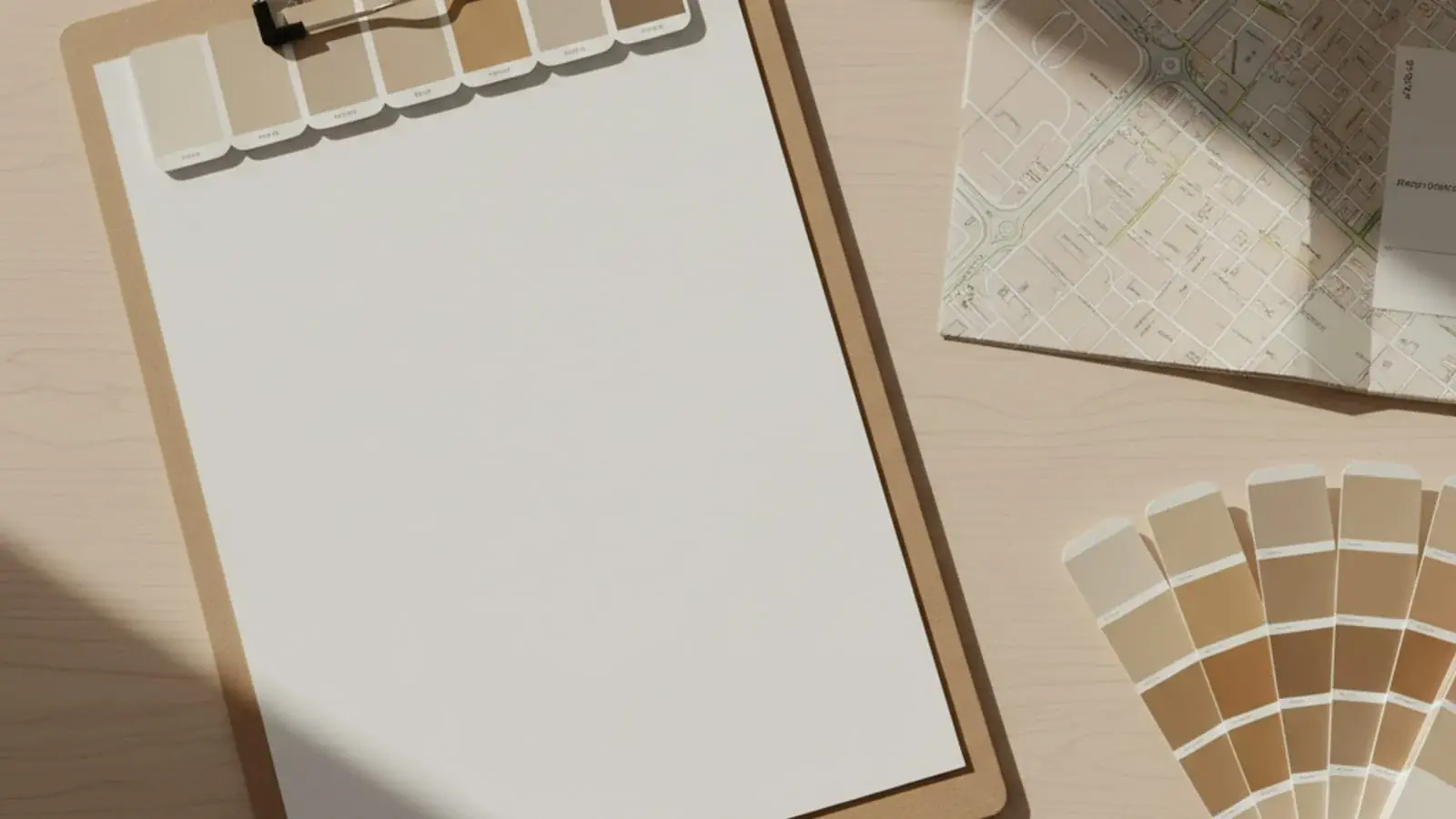
3. Submit the architectural review application
Every HOA has an application form. Typical fields:
- Owner name + address
- Contractor name + license (the painter’s)
- Proposed field, trim, and accent colors (with SW/BM codes)
- Start date (proposed)
- Color samples or swatches (sometimes required)
- Photos of the home’s current state
- Signature
Some ARCs require painted sample boards (1x2 feet each color) submitted to the property manager; others accept digital submittals with just the color codes. Check your HOA’s specifics.
4. Wait for approval
Approval timelines vary widely, from smaller HOAs with active volunteer boards that turn requests around quickly to big master-planned communities with formal review processes where the ARC meets on a fixed schedule and a missed meeting means waiting for the next one. Committee approval takes time, so start the submission before you book the crew.
You don’t start painting until you have written approval in hand. Starting early can result in a stop-work order, fines, or being required to repaint if the color ends up rejected.
5. Schedule the paint job
Once you have approval, coordinate with your painter to schedule. Include any timing restrictions from the HOA in the scheduling conversation, some communities restrict work hours (no crews before 7am, no power equipment on weekends, etc.).
6. Final inspection
Some HOAs inspect the completed paint job. Others don’t. If yours does, expect an ARC member or property manager to walk the exterior after completion and sign off.
Common reasons HOAs reject applications
Based on what shows up most often:
1. Non-approved color
The single most common rejection. An owner falls in love with a color from a store display, submits it, and the ARC kicks it back because it’s not on the palette. Solution: pick from the palette first, then love the color.
2. Mismatched combination
Approved colors on their own but not approved in that specific combination. Some HOAs explicitly approve combinations (body color X goes with trim Y); others leave it open but the ARC still has discretion to reject aesthetic mismatches.
3. Too similar to a neighbor
Many HOAs prohibit two directly-adjacent houses from being the same field color. If your neighbor already has “SW Accessible Beige” as their field, you can’t pick the same. Drive your block and note neighbors’ colors before picking.
4. Missing paperwork
Submitted form without photos, without color samples, without a contractor license, without a signature, any missing piece can bounce the application back to you and restart the clock.
5. Contractor not licensed/insured
Some HOAs require the contractor carry a valid CSLB license and provide proof of insurance (COI naming the HOA as additional insured). An unlicensed painter’s submittal will be rejected.
6. Painting something not allowed to be painted
Occasionally owners submit plans that include painting architectural stone, brick, or decorative metal that the HOA specifically excludes from the “paintable” list. These get kicked back with the offending elements removed.
What does a good submittal look like?
A professional painter handles most of this for you, but here’s what gets approved:
- Complete application form with all fields filled
- SW or BM color codes from the approved palette (not custom colors or close approximations)
- 2–3 photos of the home’s current exterior (front, sides, back)
- Small painted sample boards if required
- Proposed start and end dates
- Contractor license number and insurance info
- Property owner signature
A painter experienced with HOA jobs typically handles most of the paperwork, bringing color swatches to the in-home estimate, confirming they’re on your HOA’s palette, and preparing the submittal for your signature.
How to pick a winning color combination
Within the approved palette, some combinations age better than others:
Warm neutral field + darker trim + rich door
Example: SW Accessible Beige body, SW Urbane Bronze trim, SW Mount Etna front door. Classic, ages well, photographs nicely.
Soft greige field + white trim + black door
Example: SW Repose Gray body, SW Alabaster trim, SW Tricorn Black front door. Current, works in San Diego sun, plays well with stone.
Sand field + cream trim + sage door
Example: SW Natural Tan body, SW Creamy trim, SW Sage Green Light accent. Warm and understated, echoes the SD landscape.
Avoid
- Very dark field colors on west-facing walls (heat issues, fade faster)
- Bright whites on large stucco surfaces (too stark in SD sun)
- High contrast between field and trim on Mediterranean styles (clashes with the traditional aesthetic)
- Multiple warm-to-cool shifts (e.g., warm-cream body + cool-gray trim)
What if my HOA’s palette is terrible?
Occasionally the approved palette is objectively dated, 90s pastels, for instance. You have two options:
- Pick the least-bad combination and live with it.
- Petition to update the palette. Bring a proposal to the board suggesting updated colors, with samples and reasoning. Boards do sometimes update palettes when an owner makes a compelling case. It’s a long process, but possible.
Most San Diego HOAs have updated their palettes fairly recently and the selections are defensible. The exceptions are older 70s-80s communities that haven’t refreshed.
Can I paint my front door without full HOA approval?
Depends on the HOA. Many treat front-door-only repaints as minor changes that don’t require full architectural review, just a simple written notification. Others treat any exterior color change the same way. Check your governing documents before assuming.
What about condos and townhomes?
Condos and townhomes are more restrictive. In most cases the HOA owns all exterior surfaces (including the walls of your unit), so you can’t independently repaint anything visible from outside. The HOA manages exterior maintenance on a rotating schedule across the whole community.
Interior paint, anything inside your unit’s walls, is always up to you, HOA or not.
Frequently asked questions
How long does HOA exterior paint approval take in San Diego?
It varies. Smaller HOAs with active volunteer boards often turn requests around faster. Large master-planned communities like Rancho Bernardo or Otay Ranch tend to take longer because the ARC meets on a fixed schedule and a missed meeting restarts the clock. Committee approval takes time, so submit before you schedule your painter, not after.
What do I need to submit for HOA paint approval?
A complete submittal includes the application form with all fields filled, the Sherwin-Williams or Benjamin Moore color codes from the approved palette, 2–3 photos of your home’s current exterior, your painter’s contractor license number and proof of insurance, proposed start and end dates, and your signature. Some ARCs also require small painted sample boards. Missing any one piece bounces the application and restarts the timeline.
What if my HOA denies my paint application?
Most denials come down to a fixable problem: a non-approved color, a missing document, or a combination the ARC doesn’t allow. Fix the specific issue the denial letter cites and resubmit. If the denial feels arbitrary, you can request a hearing with the board to present your case. Most boards are reasonable when an owner shows up prepared with palette documentation and a clear explanation.
Can I appeal an HOA paint rejection in San Diego?
Yes. California law requires HOAs to have a formal dispute resolution process. Request an internal dispute resolution (IDR) hearing in writing. Bring the approved palette document, your color codes, and any email correspondence. If the board still denies without a valid basis, you can escalate to the state’s Department of Consumer Affairs, though that’s rarely necessary. Most disputes resolve at the IDR stage.
Do I need HOA approval if I’m painting my house the same color?
It depends on your HOA’s governing documents. Some treat a same-color repaint as routine maintenance and skip formal review; others require a submittal regardless. Check your CC&Rs or ask the property manager before you assume. Getting a quick written confirmation costs nothing; getting a stop-work order because you skipped the step costs a lot more.
For more on how HOAs regulate specific shades and combinations, see our HOA paint color rules guide for San Diego. If you’re looking for a contractor experienced with the submittal process, read how to find HOA-approved painting contractors in San Diego.
Ready to start?
Painters in our network typically provide a request a painter, and they handle HOA submittals as part of the job in a master-planned community. Send us the palette PDF and we’ll match you with a painter who comes prepared with swatches from your HOA’s approved list. See our exterior painting scope for everything included, or call us at (858) 400-6422 and we’ll connect you with a vetted local painter.